
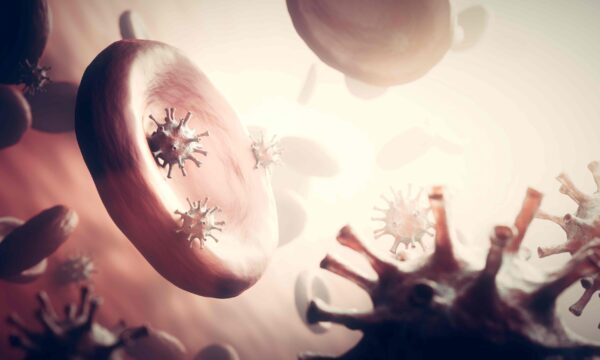
Discussions about revaccination, boosters, and the duration of vaccine effectiveness continue around the world, but one aspect remains on the periphery of public discourse: natural immunity after COVID-19. New data from a number of scientific studies show that the body can retain memory of the virus for much longer than originally thought. We are not talking about weeks or even months, but many years – possibly even a lifetime.
This is the result of observations by immunologists who have been monitoring the development of the immune response in people who have had the disease since the beginning of the pandemic. Based on blood and cell composition analysis, it has been found that antibodies and memory B cells that appear after the disease can remain in the body for a long time, much longer than the researchers themselves expected in 2020.
What do studies show?
The main source of such claims is months of research on patients who have recovered from the disease. One such study was published in a reputable medical journal. Immune memory in those who have had mild or moderate COVID-19 persists for a year and continues to develop. This means that the body “remembers” the virus and becomes better at recognizing and neutralizing it over time. In particular, two components of the immune system are key here:
- B – memory cells: they are responsible for producing antibodies when encountering the pathogen again;
- T – cells: they play a critical role in destroying infected cells and coordinating the immune response.
Studies have shown that the level of B cells in those who have had the disease did not decrease even after 12 months, but on the contrary, became more specialized. These cells continued to develop in the bone marrow. This means that the immune system “kept records” and actively updated its knowledge about the virus.
Can immunity last a lifetime?
The question of whether immunity to SARS-CoV-2 lasts a lifetime is still being studied. Recently, researchers made an interesting comparison with the virus that caused SARS (atypical pneumonia) in 2002 – 2003. Even 17 years later, some of those who had recovered were found to have T cells capable of responding to SARS and, importantly, cross-recognizing SARS-CoV-2.
This suggests that the immune system can “store” information about coronaviruses for decades. And given the similarity of the genetic sequences between SARS and SARS-CoV-2, the current virus may also be “recorded” in the immune memory for a long time.
Even if immunity is maintained, this does not mean absolute protection against reinfection. This suggests that subsequent illness is likely to be much milder and with a lower risk of complications.
Immunity after illness vs immunity after vaccination
Which is more effective: contracting the disease or getting vaccinated? As always, the answer is more complicated than a simple “yes” or “no.”
Immunity after illness is often broader. It covers the spike protein (which vaccines target) and other parts of the virus, which can provide more reliable protection against variants. On the other hand, illness is always a risk. For some groups (the elderly, people with chronic diseases), this is a very serious risk.
At the same time, vaccination is especially important for those who have not had the disease. It creates primary protection and prevents severe forms of infection. There is evidence that so-called hybrid immunity (a combination of vaccination and past illness) provides the broadest and most durable response.
But to deny the importance of natural immunity is to ignore an important part of the equation. Especially when it comes to developing scientifically sound recommendations for the population.
Why did this information remain hidden for so long?
In the early stages of the pandemic, the main task was to develop and implement a vaccine. All the efforts of the global scientific and communications communities were focused on motivating as many people as possible to get vaccinated. And this saved millions of lives.
In this situation, natural immunity was left in the shadows. As a result, there was a feeling that those who had recovered from the disease were somehow “left out” of the overall picture and not taken into account in discussions. This led to mistrust among some members of society, especially those who had had COVID-19 and did not understand why they needed to be vaccinated.
Over time, this rhetoric began to change. More and more scientific studies confirm the stability of the immune response after illness. And although this does not negate the need for vaccination, it is important to honestly acknowledge that natural immunity is real.
Knowledge is a tool
The human immune system is an incredibly complex and finely tuned mechanism. And every new virus, every epidemic gives us a chance to better understand how it works. Yes, the COVID-19 pandemic required urgent decisions. But now is the time for clarification, corrections, and additions. Natural immunity is not a reason to ignore precautions, but an important part of the scientific picture. And only by acknowledging the full spectrum of facts is it possible to develop a truly sustainable strategy for decades to come.